No products in the cart.
No products in the cart.

Watercolor is one of the most popular mediums for making ATC cards, and for good reason. It’s forgiving, it layers beautifully at small scale, and even simple techniques can produce results that look way more impressive than the effort you put in.
If you’re new to artist trading cards, they’re miniature works of art on 2.5 x 3.5 inch cards. You can learn more about the format in our beginner guide to ATC cards. This post focuses specifically on watercolor techniques that work well at this tiny size.
Most art mediums fight you when you work small. Acrylics dry too fast to blend in a tiny space. Oils are overkill. Colored pencils take forever to build up color on something this small.
Watercolor does the opposite. It flows, bleeds, and blooms in ways that actually look better at miniature scale. A wet-on-wet wash that might look uncontrolled on a full sheet becomes a gorgeous abstract background on a 2.5 x 3.5 inch card.
The other practical advantage: drying time is almost nothing. You can paint a batch of ATC backgrounds in 20 minutes and have them ready to work on within the hour.
You don’t need expensive supplies to make watercolor ATCs. Here’s what actually matters:
Paper weight is the big one. Regular cardstock will buckle and warp the second water hits it. Use watercolor paper, ideally 140lb (300gsm) cold press. Cut it down to 2.5 x 3.5 inches, or buy pre-cut ATC blanks.
For paint, any student-grade watercolor set works fine. Tubes give you more control over color intensity than dry pans, but either works. Start with what you have.
Brushes: a size 6 round and a size 2 round will cover almost everything you need at this scale. That’s it. You don’t need a whole set.
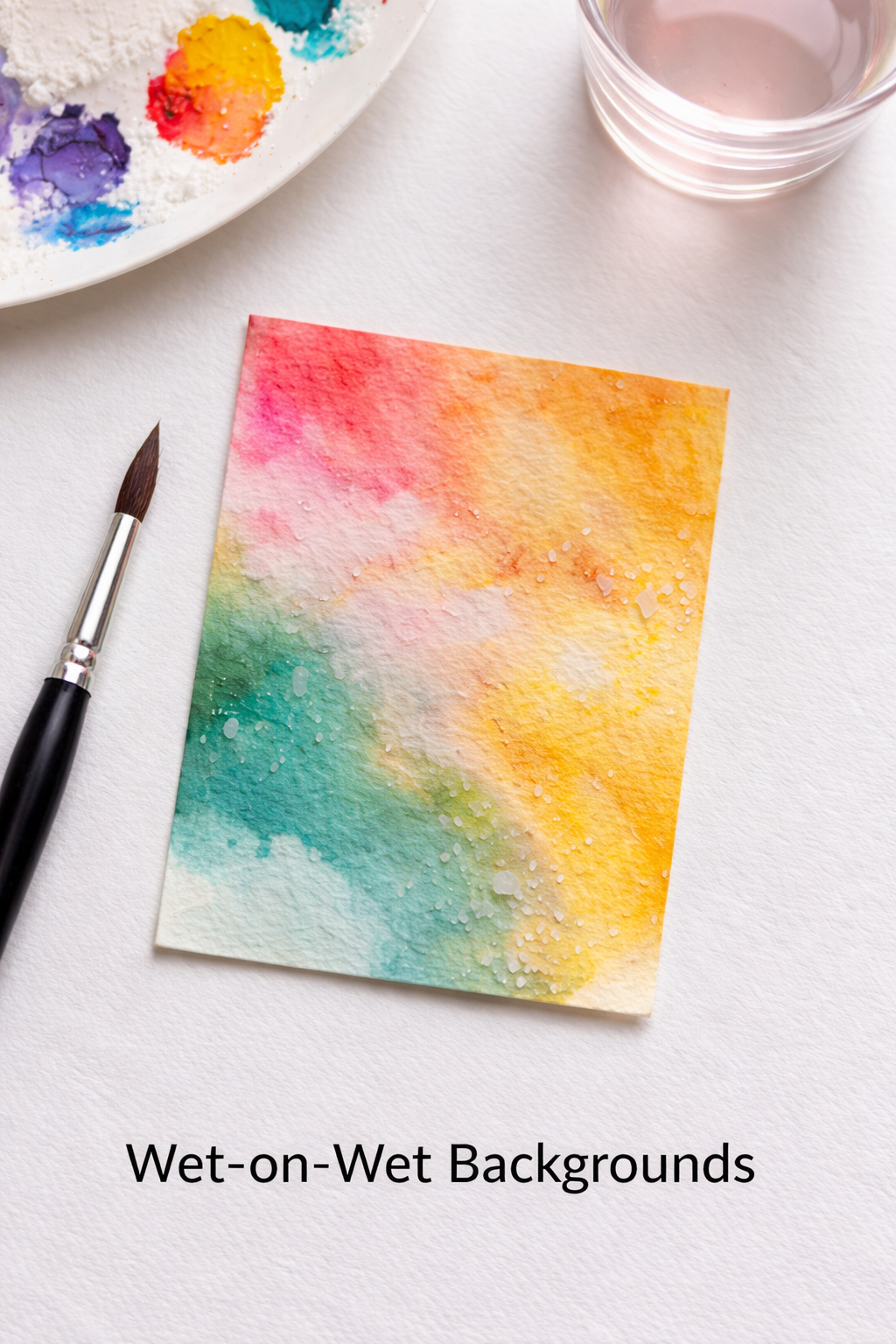
This is the easiest technique and probably the most satisfying. Brush clean water over your entire card, then drop in color. The paint spreads and blends on its own. Tilt the card gently to guide the flow.
Try dropping in two or three colors and letting them meet in the middle. The places where they blend create organic transitions you could never paint deliberately.
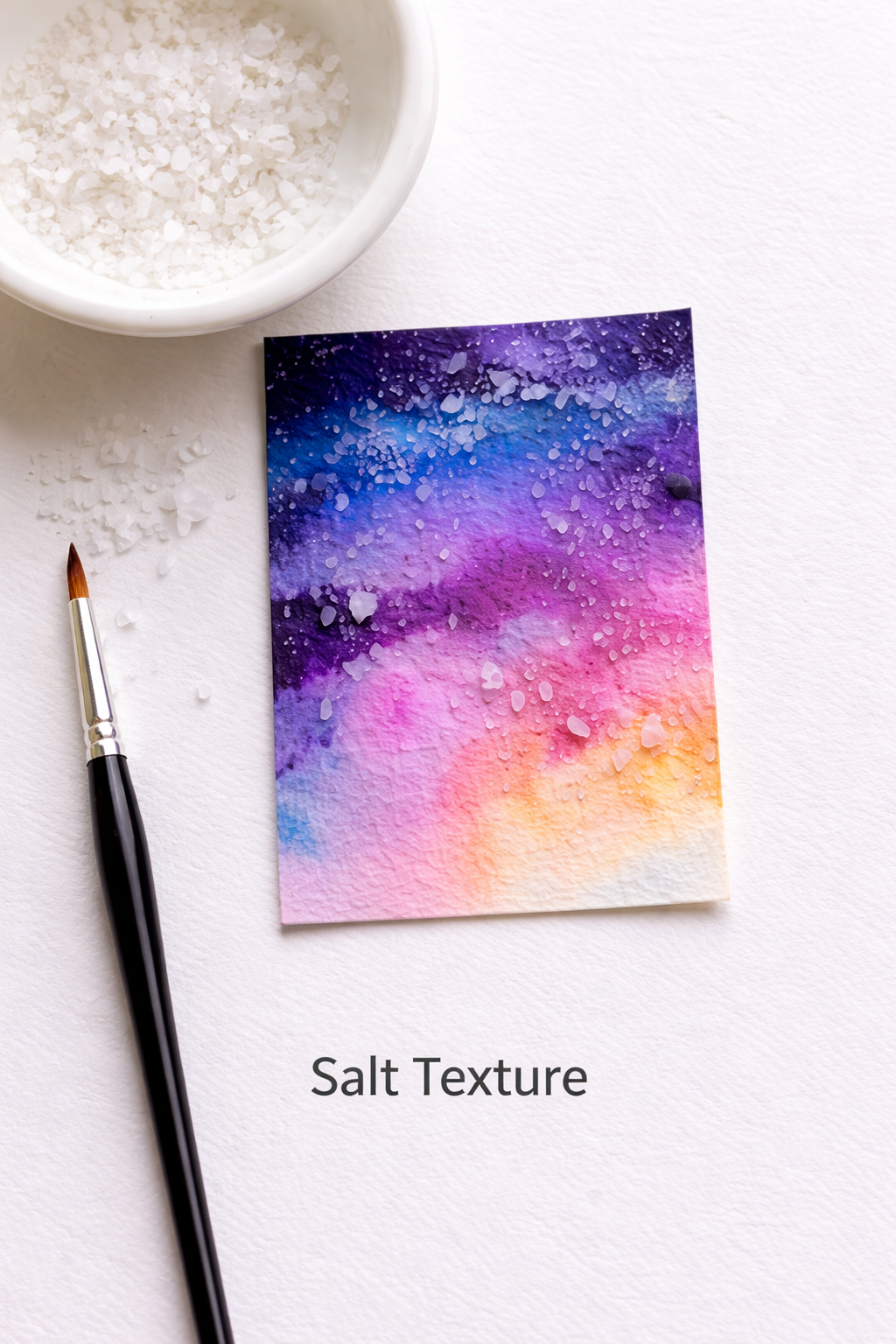
While a wet-on-wet wash is still damp (not soaking, not dry, that sweet spot in between), sprinkle coarse salt over the surface. The salt absorbs the pigment around it and creates a crystalline, star-like texture. Brush off the salt once everything is fully dry.
This looks especially good with deep blues and purples. It gives the card a galaxy or night-sky feel without any actual skill required.
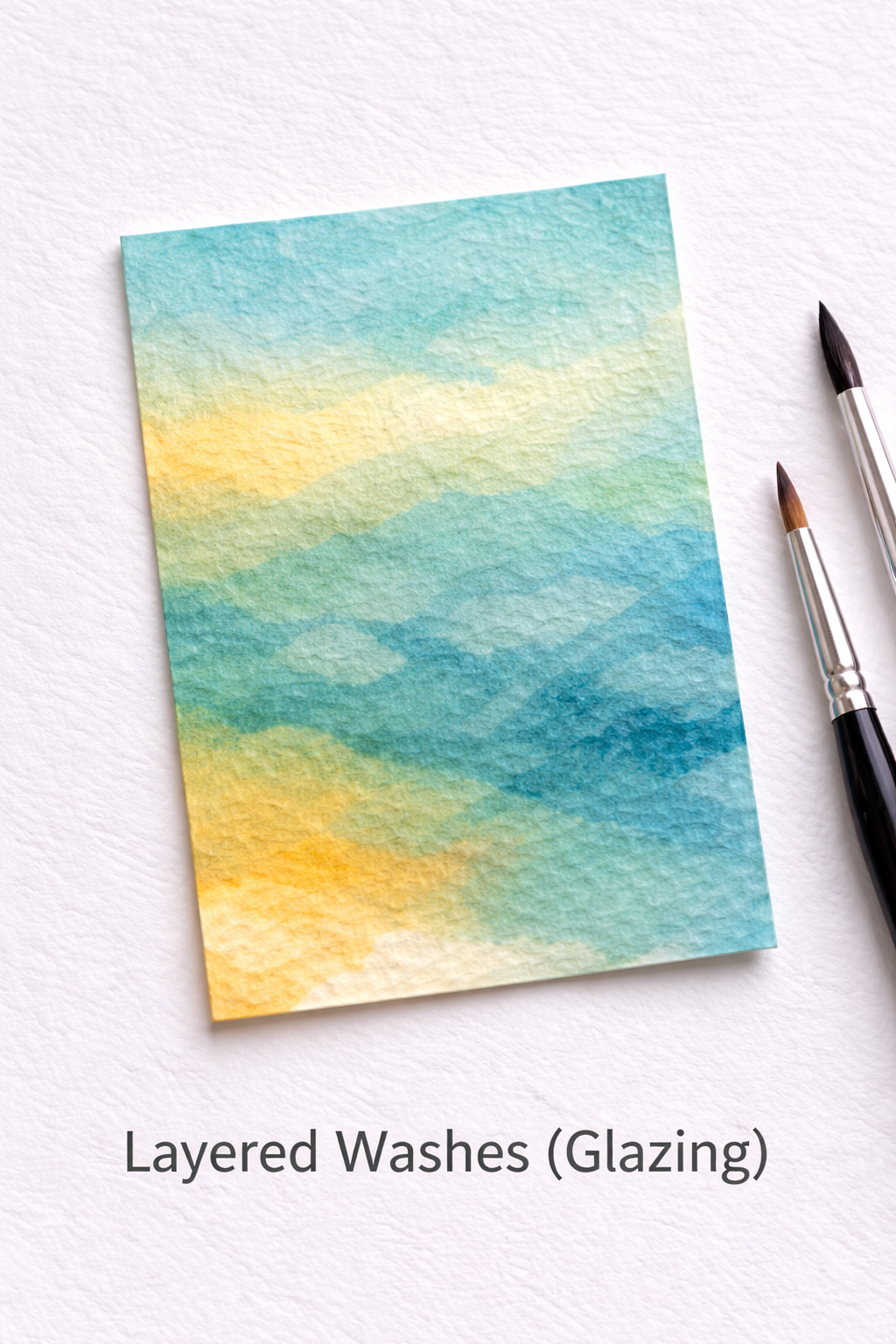
Paint a light wash and let it dry completely. Then paint another wash on top, either the same color for more intensity or a different color to shift the hue. Each layer is transparent, so the colors underneath show through.
This is how you build depth in a small space. Three or four thin layers create richness that a single heavy application never will.
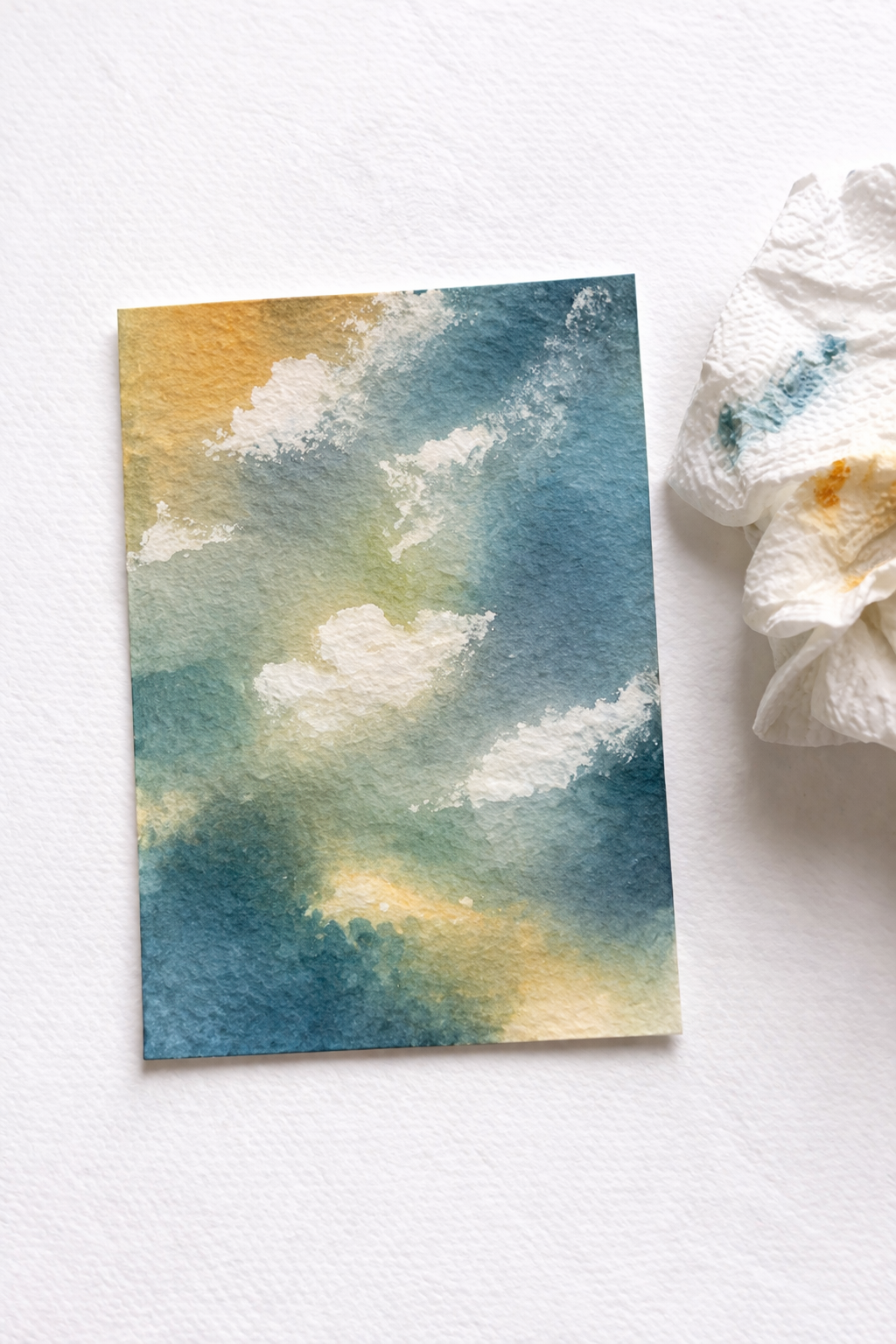
While your wash is still wet, press a dry paper towel, tissue, or dry brush into the paint to lift color back out. This creates highlights, clouds, soft shapes, or the illusion of light hitting a surface.
It’s a removal technique rather than an adding technique, which makes it feel a little backwards at first. But once you get the timing right, it’s incredibly useful.
Paint a loose watercolor background, let it dry, then add detail with a fine-tip pen. Micron pens, gel pens, or even a ballpoint all work. The watercolor provides color and atmosphere. The pen provides structure and detail.
This combination is probably the most popular ATC style you’ll see in trading communities because it’s accessible and the results are consistently good.
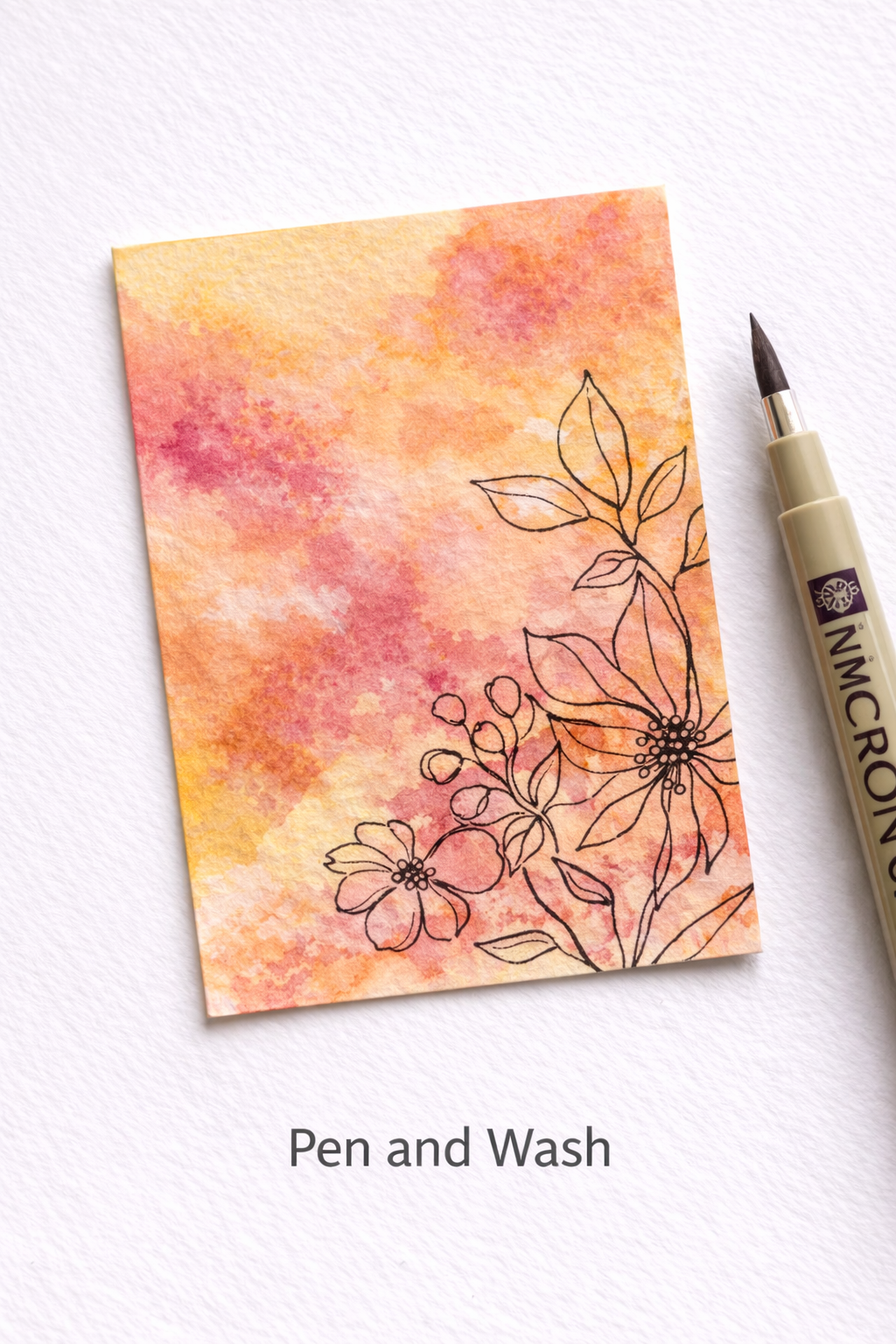
If you want to skip the painting step entirely, or if you want a consistent base to work from, pre-made watercolor backgrounds are a real time saver. You print them, cut them to size, and use them as your starting layer.
We offer free watercolor ATC backgrounds you can download and start using right now. They’re designed specifically for the 2.5 x 3.5 inch ATC format and print on any home printer.
From there, you can add pen work, stamping, collage elements, stickers, or whatever else fits your style. The background does the heavy lifting so you can focus on the fun part.
Work in batches. Paint 5 to 10 backgrounds at once instead of one at a time. Some will turn out great. Some won’t. That’s normal. Working in batches takes the pressure off any single card.
Don’t overwork it. Small-scale watercolor looks best when it’s a little loose and imperfect. The more you fuss with it, the muddier it gets. Put the brush down sooner than you think you should.
Let layers dry fully between steps. Impatience is the number one cause of muddy watercolors. If the previous layer is even slightly damp, the next one will bleed into it.
Use the white of the paper. In watercolor, your lightest value is the paper itself. Plan ahead for where you want highlights and leave those areas unpainted. It’s easier to leave white space than to try to get it back.
If you already have a basic watercolor set and some decent paper, you have everything you need. Cut some cards to size and start experimenting. The beauty of ATCs is that each one only takes a few minutes, so there’s almost no cost to trying something and seeing what happens.
Browse our ATC and ACEO collection for handmade originals, or grab the free watercolor backgrounds to get started with pre-made bases you can build on.
Want to understand the difference between ATC and ACEO formats? We break it all down in ATC vs ACEO: What’s the Difference.