No products in the cart.
No products in the cart.

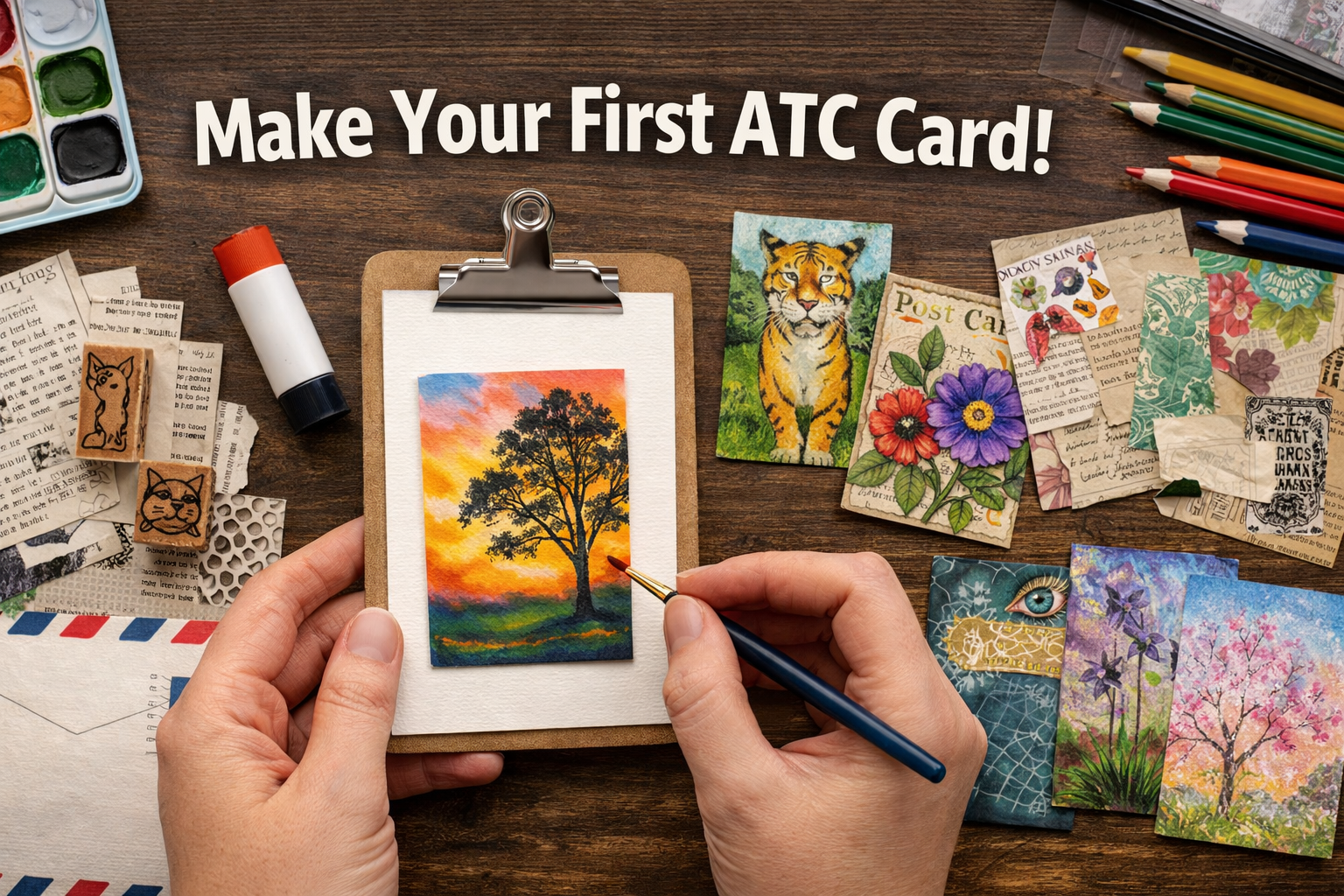
Making an ATC card is one of the lowest-barrier ways to start creating art. The card is 2.5 x 3.5 inches. You can finish one in 15 minutes. There is no wrong way to do it.
Here is how to make your first one.
At minimum: a piece of heavy paper or cardstock cut to 2.5 x 3.5 inches, and something to make marks with. That is literally it. Pens, markers, watercolors, colored pencils, stamps, collage materials, acrylic paint, crayons. Whatever you have.
If you want paper that handles wet media well, 140lb watercolor paper is the standard. You can buy it in sheets and cut to size, or pick up pre-cut watercolor ATC cards that are already sized and ready to go.
Here are the most common approaches, from easiest to most involved:
Collage: Cut or tear paper, magazine clippings, scrapbook paper, or ephemera and glue them onto your card. Layer pieces, overlap edges, and fill the space. No drawing required.
Stamping and ink: Use rubber stamps or foam stamps with ink pads. Add color with markers or colored pencils. Quick and repeatable.
Watercolor: Paint a simple wash, a pattern, or a small scene. The small size means you use very little paint and the whole thing dries fast.
Mixed media: Combine any of the above. Paint a background, glue something on top, draw over it, add a sticker. The layered look is half the appeal of ATCs.
If you want a collage-based starting point without sourcing your own materials, the DIY ATC kits come with themed materials and pre-printed card fronts.
The back of an ATC traditionally includes: the title of the piece, the artist name, the date, the medium used, and a number if it is part of a series. This is not required, but it is standard practice if you plan to trade. It gives the recipient context about what they are holding.
Some people hand-write this information. Others print labels or use a stamp. The Paint Your Own ATC Kit includes cards with swap-ready backs already printed with fields for title, artist, medium, and date.
Once your card is done, you have two choices. Trade it with another artist (that is what ATCs are for), or keep it as a small finished piece of art. If you want to sell it, it technically becomes an ACEO instead of an ATC. The full ATC and ACEO guide explains the difference.
To find trading partners, look for ATC swap groups online, check out the HeartSwapz trading community, or start by swapping with a friend.
ATCs are supposed to be small, fast, and imperfect. The format exists to lower the stakes. You are not making a painting for a gallery. You are making a tiny thing to give away. Start messy. Start today.